



How Many Baby Clothes to Buy per Size?
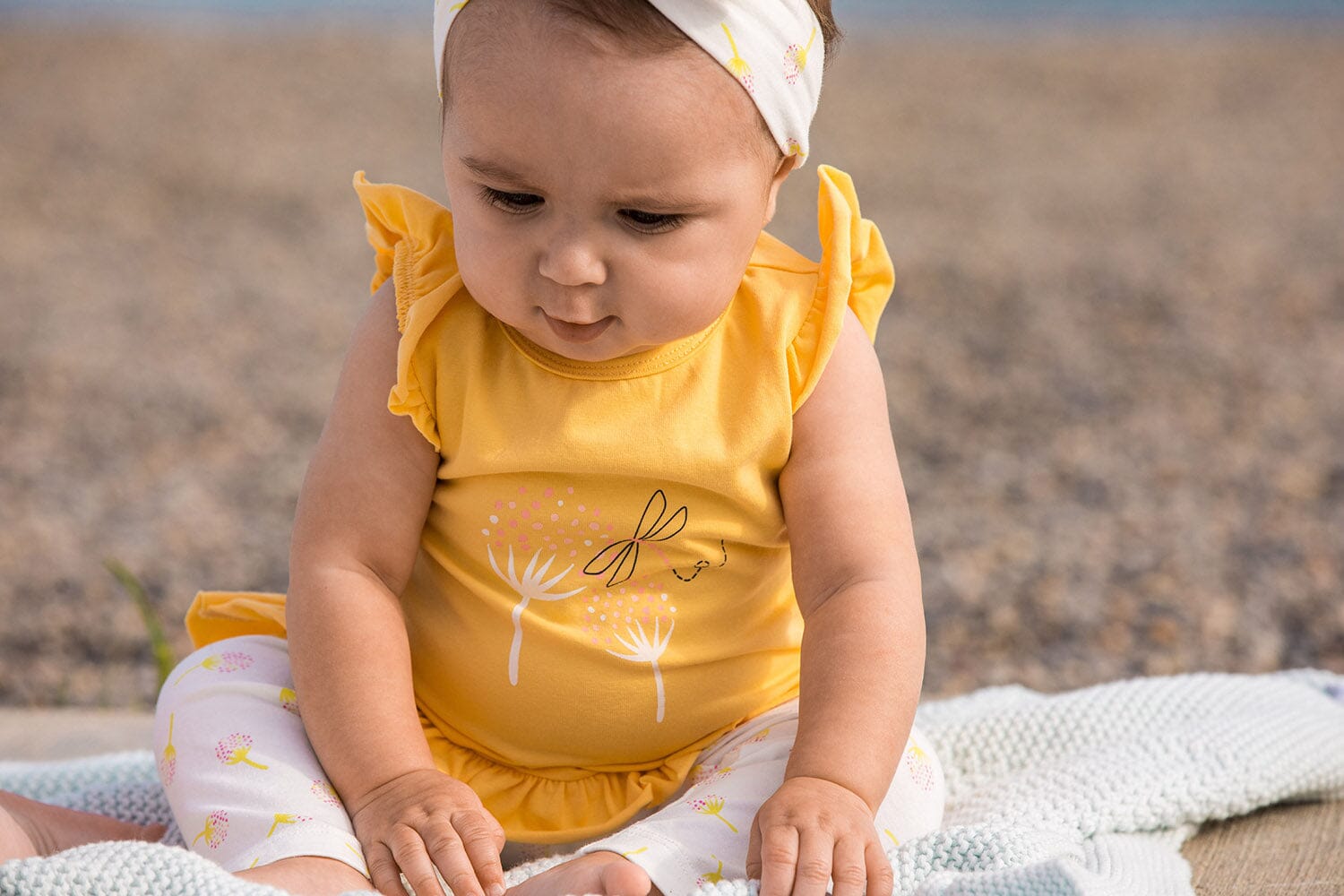
To build a clothes list for a new baby, one rule is enough. Plan enough pieces to last three days without doing laundry, because babies get dirty and need changing often. The table below applies this rule size by size, from birth to 24 months. You can then adjust it to your own laundry rhythm.
Article Summary
Here is the baby clothes list by month, from birth to 24 months. For most families, three days of spares in each size is enough. Between 3 and 6 months, that means about 7 bodysuits, 7 rompers and sleepers, 7 pajamas, 6 to 8 tops and 4 to 6 pants. Newborn and 1-month sizes only last a few weeks, so buy sparingly. For winter, add a snowsuit, a hat, mittens and a base layer, and choose your baby's true size.
Baby Clothes List by Month
The table below shows how many baby clothes to plan for in each size. The numbers represent spare pieces for three days.
| Item | Newborn | 1 month | 3 months | 6 months | 9 months | 12 months | 18 months | 24 months |
|---|---|---|---|---|---|---|---|---|
| Bodysuits | 2 | 5 | 7 | 7 | 7 | 7 | 5 | 4 |
| Rompers and sleepers | 2 | 5 | 7 | 7 | 7 | 7 | 5 | 3 |
| Pajamas | 4 | 7 | 7 | 7 | 7 | 7 | 4 | 4 |
| Short- or long-sleeved tops | - | 4 | 6 | 8 | 8 | 8 | 8 | 10 |
| Pants | - | 3 | 4 | 6 | 6 | 6 | 7 | 7 |
| Sweaters or jackets | - | 2 | 3 | 3 | 3 | 3 | 3 | 3 |
| Pairs of socks | 5 | 5 | 5 | 5 | 5 | 5 | 5 | 5 |
| Hats | 3 | 3 | 3 | 3 | 3 | 3 | 3 | 3 |
These quantities are easy to change. If you do a load of laundry every day, you can buy fewer. If laundry waits until the end of the week, add a few pieces.
The Three-Day Rule
Count enough bodysuits, pajamas, tops and pants to cover three days. A baby can stain several outfits in a single day, between feedings, spit-up and diaper changes. With three days of spares, laundry is never urgent.
Buy Few Pieces in Newborn Size
Newborn and 1-month sizes are worn for a short time. It is better to buy a few pieces and wait to see your baby's size before completing the wardrobe.
A Little Big Rather Than Tight
A slightly big piece stays comfortable, while a tight one restricts movement. Pajamas are the exception. Health Canada recommends snug-fitting sleepwear, so buy pajamas in the right size. Babies grow fast. According to AboutKidsHealth, most healthy, full-term newborns triple their birth weight by their first birthday.
How Many Clothes for a Newborn?
For a newborn, two bodysuits, two rompers, four pajamas, five pairs of socks and three hats are enough in newborn size. This size lasts a few weeks, sometimes less. There is no need to buy more before you know your baby's size at birth.
In 1-month size, the quantities go up to 5 bodysuits, 5 rompers and 7 pajamas. Add 4 tops, 3 pants and 2 sweaters or jackets.
How Many Pajamas and Bodysuits per Size?
Pajamas
Plan 4 pajamas in newborn size, then 7 in 1 month, 3 months and every size up to 12 months. That quantity lets you change your baby in the middle of the night without running out of spares. At 18 and 24 months, a child wears only one pair a night: three for the three-day rule, plus one spare, so 4 in all. You will find the baby girl pajamas and the baby boy pajamas in their own collections.
Bodysuits and Rompers
A bodysuit is worn every day, often under another top, so you need plenty. Plan 2 bodysuits in newborn size, 5 at 1 month, then 7 from 3 to 12 months. The quantity drops to 5 at 18 months and to 4 at 24 months, because the child then wears more tops and pants.
For rompers and sleepers, plan 2 in newborn size, 5 at 1 month, 7 from 3 to 12 months, 5 at 18 months and 3 at 24 months. They come for girls and for boys. To complete the base, browse the short- or long-sleeved tops for baby girls and for baby boys.
Winter Clothes to Plan For
If your baby is born in the fall or winter, add a few pieces to the list.
- A baby snowsuit, available from 3 to 36 months.
- A hat and mittens, which you will find with the baby winter accessories.
- A base layer, for baby girls and for baby boys.
For the snowsuit, choose your baby's true size, not a size up. deux par deux snowsuits already run roomy. For the complete list of seasonal pieces, read our baby winter clothes checklist.
How to Choose the Right Size
A few guidelines help you choose.
- The age on the label is a starting point. If your baby is smaller or bigger than average, go by their measurements.
- Each product page has a size chart. Check it before you order.
- deux par deux clothes start at 3 months. You will find them in the baby girl and baby boy collections.
How to Adapt the List to Your Routine
The table is a starting point. Three situations come up often.
- You do laundry every day. You can reduce the quantities of bodysuits, tops and pants by about a third.
- Your baby spits up a lot. Add two or three tops and one more pair of pajamas. Unplanned changes empty the stock quickly.
- Your baby goes to daycare. Plan a complete spare outfit to leave there, in addition to the quantities in the table.
From 12 months, your child moves more and dresses more and more like a big kid. You play less with bodysuits and more with tops and pants, which are layered according to the temperature. A piece you no longer need can also go to a brother, a sister or a friend, which is a good reason to buy durable basics rather than a large number of pieces.
Frequently Asked Questions
How many clothes should I buy for a baby?
Plan enough pieces for three days in each size. In 3-month size, that means 7 bodysuits, 7 rompers and sleepers, 7 pajamas, 6 tops, 4 pants, 3 sweaters or jackets, 5 pairs of socks and 3 hats. The table above gives the quantities for the other sizes, from birth to 24 months.
How many pajamas does a newborn need?
Four pajamas are enough in newborn size. From 1-month size, plan seven, up to 12 months.
How many bodysuits per size?
Plan 2 bodysuits in newborn size, 5 at 1 month, then 7 from 3 to 12 months. The quantity then goes down as the child wears more tops and pants.
How long does a baby wear newborn size?
A few weeks, sometimes less. That is why it is better to buy only a few pieces in this size.
What clothes should I buy before the birth?
A few bodysuits, pajamas and pairs of socks in newborn and 1-month sizes, along with a few hats. Add the rest according to the season and your baby's actual size.
What size of clothes should I buy for a baby?
Start from the age on the label, then check the size chart on the product page. Between two sizes, a slightly big piece is more comfortable, except for pajamas, which should fit snugly.