


Pajamas, rompers, sleep sacks, sleepers... Figuring out what your newborn should wear to bed is one of the first questions new parents ask themselves. And for good reason: a baby who is too warm sleeps poorly, fusses, and cries. Same goes for a baby who is too cold. Finding the right balance takes a little practice, but mostly a few clear guidelines.
In general, a baby's body temperature naturally drops once night falls. But how much it drops depends on the season, the room's heating, the child's age, and even their personal metabolism. The key is to dress your baby according to the actual conditions in the room, rather than following a one-size-fits-all rule.
Whether you're looking for the perfect baby girl pajamas or baby boy pajamas for bedtime, here is our complete guide to dressing your newborn for sleep, degree by degree.
Why Do Newborns Struggle to Regulate Their Temperature?
In a healthy child under normal conditions, a baby's typical body temperature falls between 36.5°C and 37.5°C.
That said, in the first weeks of life — and especially during the first two months — a newborn has a much harder time maintaining a stable temperature. Their thermoregulatory system is not yet fully mature. Any change in their environment directly affects their small body, which then has to burn extra energy to compensate.
This is also why a baby's hands and feet tend to feel cooler than the rest of their body: the body concentrates heat around the vital organs. This is completely normal and does not necessarily mean your baby is cold.
What This Means for You in Practice
Since your newborn cannot yet tell you when they are uncomfortable, you become their sensor. That means:
- Monitoring the room temperature regularly.
- Adjusting their outfit based on the actual conditions in the room, not the season shown on the calendar.
- Learning to read your baby's physical signals (more on that below).
What Is the Ideal Temperature for a Baby's Room?
The vast majority of pediatricians and health organizations across North America recommend keeping a newborn's room between 20°C and 22°C. This is the range in which a baby can sleep comfortably without risking overheating or getting a chill.
A simple trick: go by your own comfort. If you feel comfortable in a t-shirt in the room, your baby probably does too. If you feel like reaching for a sweater, that's a sign it may be time to add a layer to your baby's outfit.
How to Check the Room Temperature
Two practical options:
- A classic room thermometer: affordable and reliable. Place it at mattress level, away from windows and heat sources.
- A baby monitor with a built-in thermometer: more versatile, it alerts you if the temperature goes outside the ideal range, even in the middle of the night, so you can react quickly.
Choosing Your Newborn's Sleepwear Based on Temperature
Your baby's nighttime clothing should be chosen based on the actual room temperature, not the time of year. A well-heated apartment in January can feel just as warm as a room in September. Always check the thermometer!
Here is a practical guide, step by step:
Between 16°C and 18°C When temperatures are low, plan a warm outfit made up of socks, a hat, a long-sleeve bodysuit, and a thick sleep sack. Baby will stay cozy all night long.
Between 18°C and 19°C Opt for a warm but breathable outfit: an organic cotton pajama, a long-sleeve bodysuit, and a sleep sack. In fall or winter, consider adding a sleeper to cover your baby through the night, up until around 18 to 24 months.
Between 20°C and 21°C With temperatures a little milder, go for a short-sleeve bodysuit, a light pajama, and a sleep sack. This combination will keep their body at the right temperature while leaving their little arms slightly cool.
Between 22°C and 23°C When the mercury rises — in spring or during a mild fall — a short-sleeve bodysuit and a light sleep sack is plenty.
Between 24°C and 25°C On warm summer nights, dress your baby in a lightweight short-sleeve bodysuit and a very light sleep sack. Choose natural, breathable fabrics like organic cotton, which allow body heat to escape effectively.
25°C and above At 25°C and above, you can let your baby sleep in just a diaper. Choose an absorbent diaper made from natural materials to protect their delicate skin. If temperatures are high, leaving the window slightly open can help circulate cool air in the room.
What Type of Clothing Should You Choose for Your Newborn's Sleep?
Beyond temperature, the choice of clothing itself matters. Whether you are browsing our baby girl clothing or baby boy clothing collection, here are the key categories to know:
The One-Piece Pajama
Practical and safe, the one-piece pajama (also called a sleeper or footie pajama) is the go-to for newborns. It keeps the body covered without any risk of pieces shifting during the night. Our organic cotton pajamas, designed in Montreal, are built for maximum comfort with zippers or snap buttons that make nighttime diaper changes as easy as possible.
The Bodysuit and Romper
A baby girl romper or a baby boy romper works perfectly as a base layer under a sleep sack. Long sleeves for cool nights, short sleeves for warmer ones — it adapts to every season. It is also an especially practical garment for the early months: no waistband, minimal seams, and a cut that is gentle on a baby's delicate tummy.
Baby girl bodysuits and baby boy bodysuits are ideal as a base layer on cooler nights, worn under a pajama or a sleeper.
The Sleep Sack or Sleeper
A sleep sack (also known as a wearable blanket) is a much better option than a loose blanket, which can pose a risk for very young babies. It keeps your baby warm without any chance of covering their face during sleep. Be sure to choose the right size: a sleep sack that is too large can allow your baby to slip inside.
Fabrics to Look For
For a newborn's nighttime outfit, some fabrics stand out above the rest:
- Organic cotton: soft, breathable, hypoallergenic. Perfect year-round, it is the top choice for baby sleepwear. It regulates heat well and contains no chemical irritants for a newborn's sensitive skin.
- Cotton jersey: stretchy and comfortable, ideal for one-piece pajamas.
- Merino wool (for very cool nights): a natural temperature regulator, it keeps baby warm without causing overheating.
Avoid synthetic fabrics, which trap heat and can irritate a newborn's delicate skin.
How to Tell If Your Baby Is Too Warm or Too Cold
To properly adjust your newborn's outfit, you need to learn how to read the signals they send. The good news: with a little practice, it becomes second nature.
Signs your baby is too warm:
- The back of the neck feels damp or moist to the touch
- Faster or irregular breathing
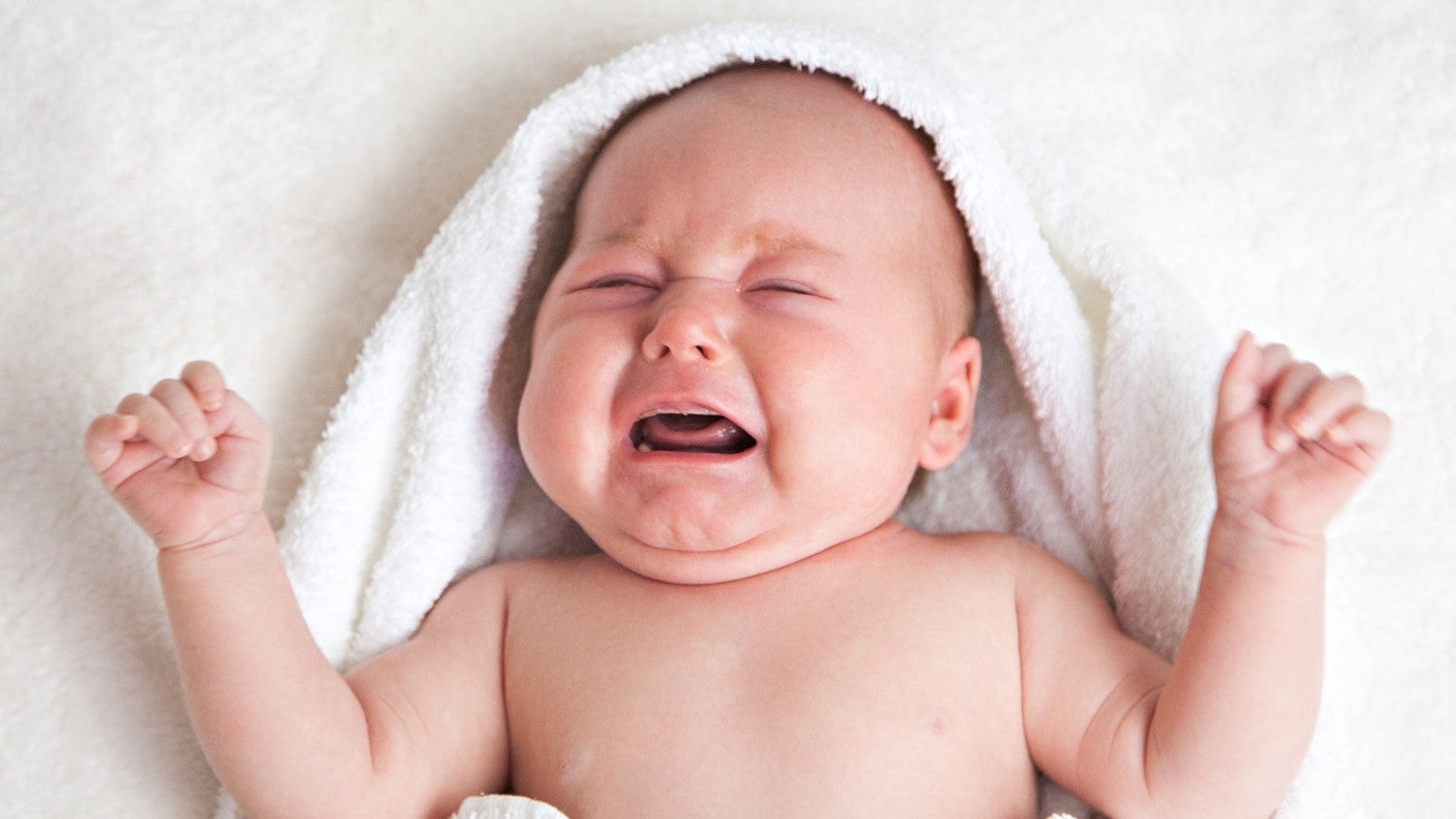
- Fussiness or unexplained crying
- Warm, sweaty hands and forehead
- Small heat rash bumps on the skin
Signs your baby is too cold:
- The chest feels cold to the touch (press the back of your hand against it)
- Very cold hands and feet (slightly cool is normal, but ice-cold is not)
- Baby wakes up frequently and seems uncomfortable
In any case, if your child shows unusual signs such as shivering, an abnormally high temperature, or breathing difficulties, contact a doctor right away.
What to Do If Your Baby Is Too Warm or Too Cold
My Baby Is Too Warm
The first step is to remove a layer of clothing. Above 24–25°C, swap the cotton pajama for a simple short-sleeve bodysuit. If it gets very hot (above 27°C), do not hesitate to remove all clothing except the diaper, or leave a very light t-shirt on to absorb perspiration.
My Baby Is Too Cold
Add a layer: a thicker long-sleeve pajama, a pair of little socks, or even a light hat if the room is really chilly. A sleeper can also make a big difference on the coldest nights.
A Few Guidelines for a Good Night's Sleep
Nighttime clothing is one piece of the puzzle, but the sleep environment as a whole plays just as important a role for your newborn. Here are a few things to keep in mind:
- Choose clothing that fits your baby properly: too large and it can bunch up and obstruct breathing; too tight and it constricts their body.
- Avoid blankets, duvets, and pillows in a newborn's crib — a sleep sack is a much safer alternative.
- Always place your baby on their back to sleep. This is the position recommended by pediatricians to reduce sleep-related risks. Health Canada also provides detailed safe sleep guidelines for infants if you want to learn more.
- Choose a firm mattress in a certified crib.
- In summer, keep the blinds closed during the day to maintain a cool room at night, and air it out in the early morning.
- In winter, avoid overheating the room — 20°C is more than enough.
Dressing your newborn for sleep is ultimately about observation and adjustment. Over time, you will learn to read your baby's signals and find the perfect outfit for restful nights. And once the sun is up, check out our article on how to dress your child in winter to keep the good habits going!